

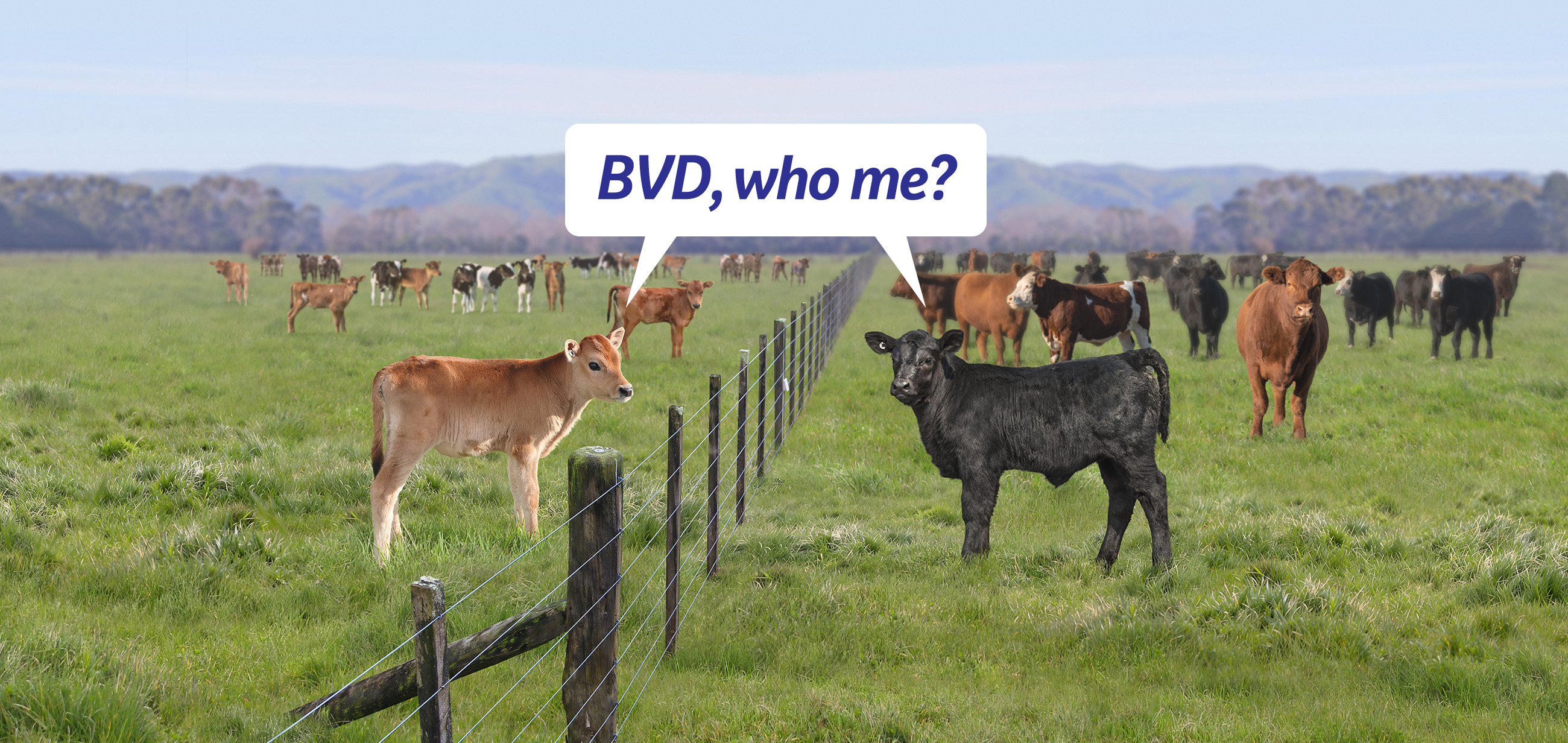
Twelve months’ fetal protection is central to preventing persistently infected (PI) calves and helping break the cycle of BVD
Effective control goes further: INVESTIGATE your herds BVD status, ELIMINATE any PI animals, and VACCINATE breeding cattle to protect against fetal infection, address any risk of future PI calves, and strengthen herd-wide protection. Together, these actions form a planned approach to good herd management.
See how future PI calves can be prevented.
Watch how BVD infection spreads, why PI animals keep it circulating, and how 12 months’ fetal protection helps break the cycle.
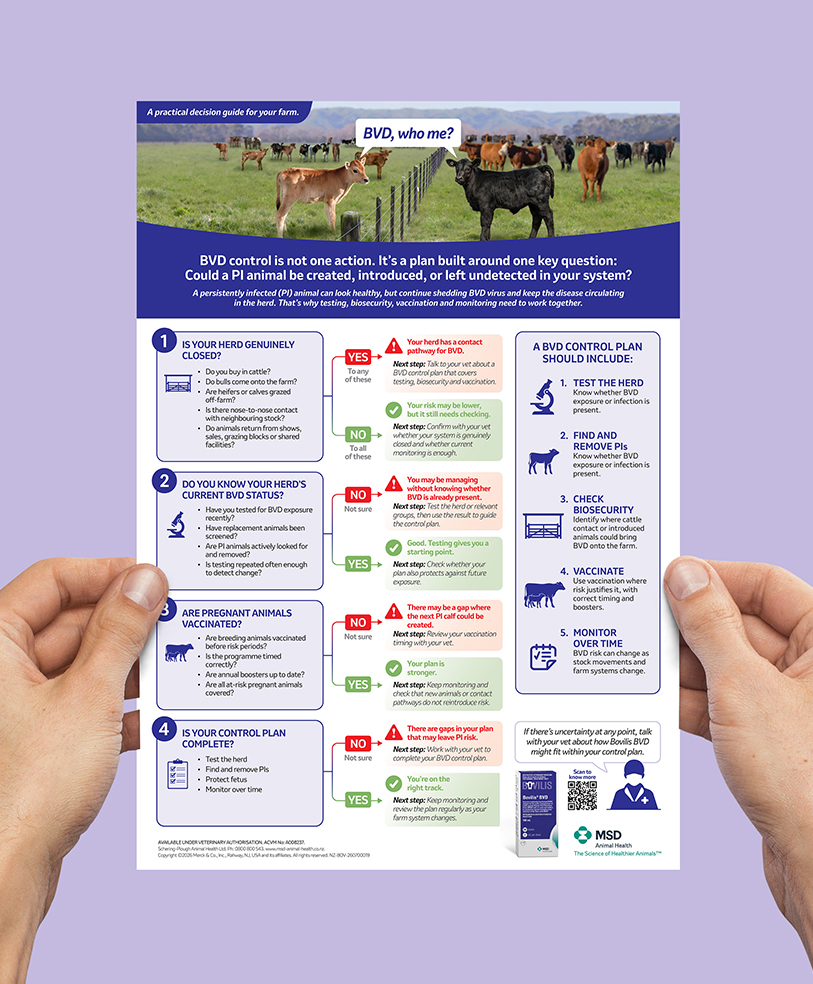
A practical decision guide for your farm.
BVD control is not one action. Its a plan built around one key question: Could a PI animal be created, introduced, or left undetected in your system?
A persistently infected (PI) animal can look healthy, but contiune shedding BVD virus and keep the disease circulating in the herd. Thats why testing, biosecurity, vaccination and monitoring need to work together. Use this guide to identify potential gaps in your current BVD control plan.
Talk to your vet about incorporating Bovilis BVD into your herd’s BVD control plan
Bovilis BVD
12 MONTHS FETAL PROTECTION*
The longest coverage available.
NZ’s leading BVD vaccine**
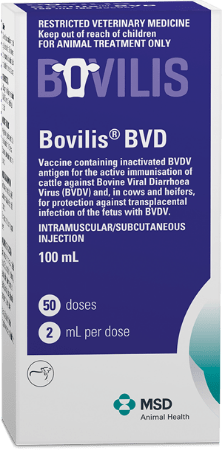
Interested in learning more about Bovilis® BVD and its role in BVD management? Find out more
Want to better understand BVD and how it can be identified and managed on farm? Explore our BVD resources
*Following a third dose (annual vaccination) Bovilis BVD provides 12 months fetal protection.
** CEESA Market Data Q1 2026
AVAILABLE ONLY UNDER VETERINARY AUTHORISATION ACVM No. A008237. Schering-Plough Animal Health Ltd. Ph: 0800 800 543. www.msd-animal-health.co.nz. Copyright ©2026 Merck & Co., Inc., Rahway, NJ, USA and its affiliates. All rights reserved. NZ-BOV-260800002